Process
Stage 1
Foundation
Inspiration: The concept for this PIT truly formulated when I attended a seminar at the University of the Arts, London, at a seminar panel discussion regarding Design in 2040.
The speakers discussed the definition and the evolution of it in the uncertain future, taking into account the current environmental, societal, cultural, and political landscapes.
The question was "What will design in 2040 look like?" The was a range of topics discussed from various perspectives, from angles of logic and large-scale policy change, to points of hopelessness and revolution in the younger generations.
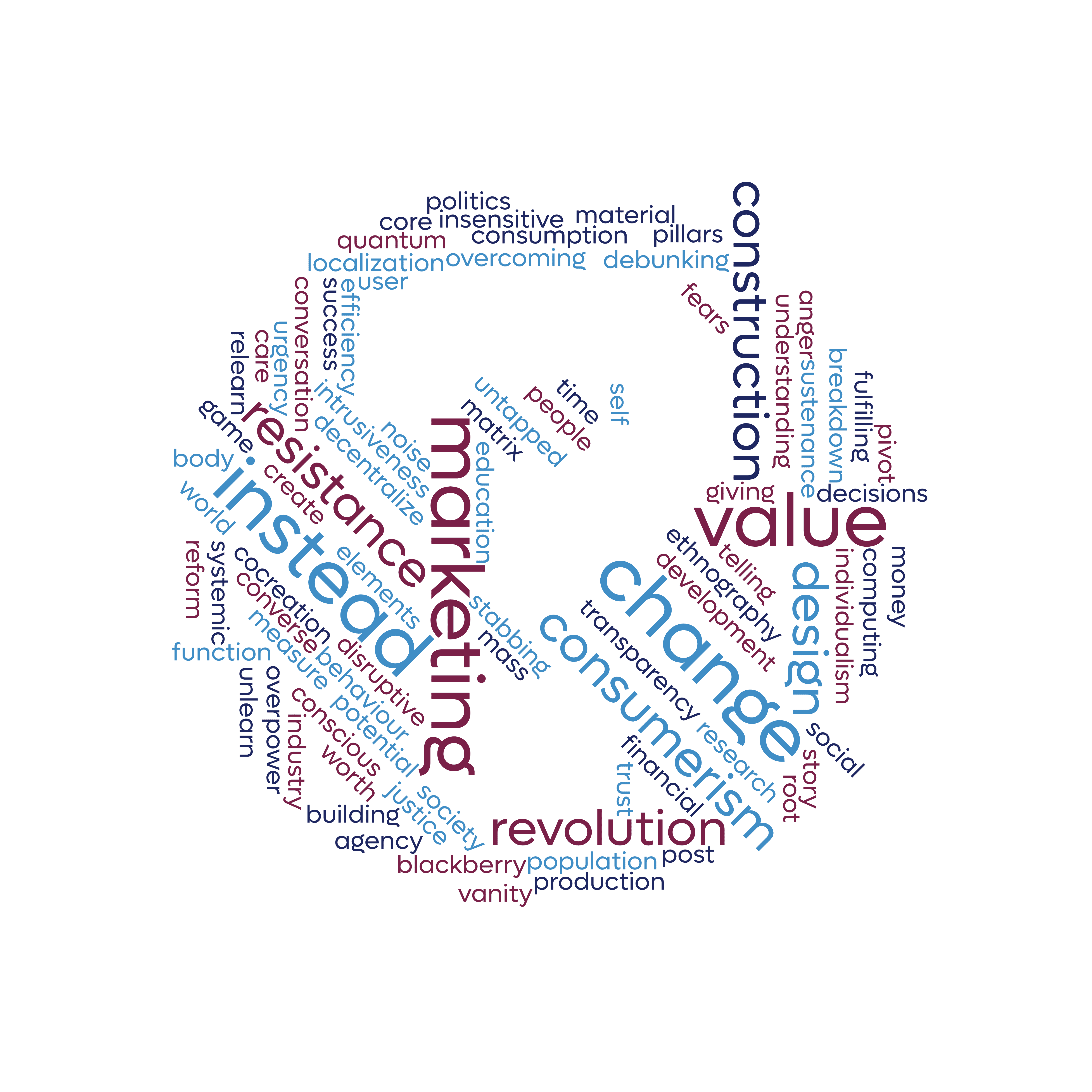
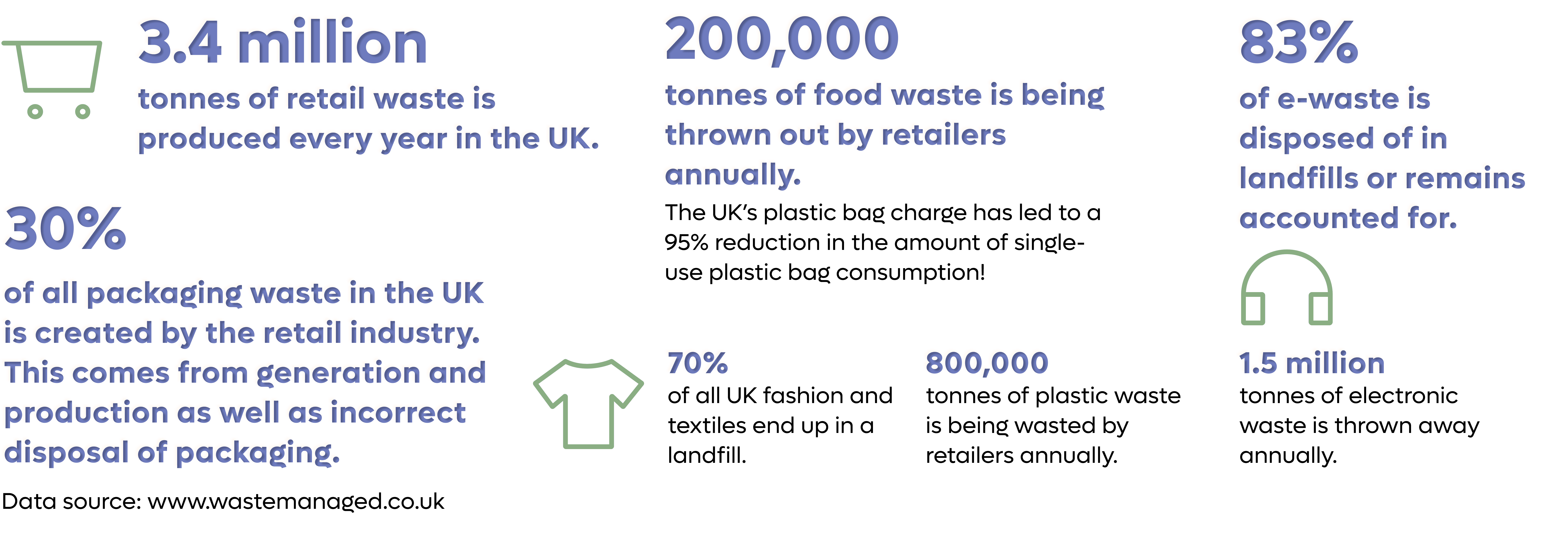
A key takeaway from the panel was that as designers, we also design for money and profit is king for many clients. This capitalism, consumerism, commercialization, and race for revenue has led us to a tipping point in history.

Key Research
Takeaways
The literature deeply influenced the foundational concepts of the project, providing both theoretical grounding and actionable inspiration. The Value of a Whale by Adrienne Buller offered a critical lens on how economic systems commodify environmental efforts, underscoring the importance of reframing value to prioritize sustainability and care over profit. This connected directly with the Cura project’s goal to redefine worth through time and community contributions. In Less is More, Jason Hickel’s exploration of degrowth principles emphasized the necessity of reducing consumption and creating systems that enhance well-being, influencing the community-driven, non-fiat currency model. Similarly, The Future of Money by Bernard Lietaer delved into alternative currencies and trust-based economies, which informed the structural design of Cura’s decentralized and transparent economic system.
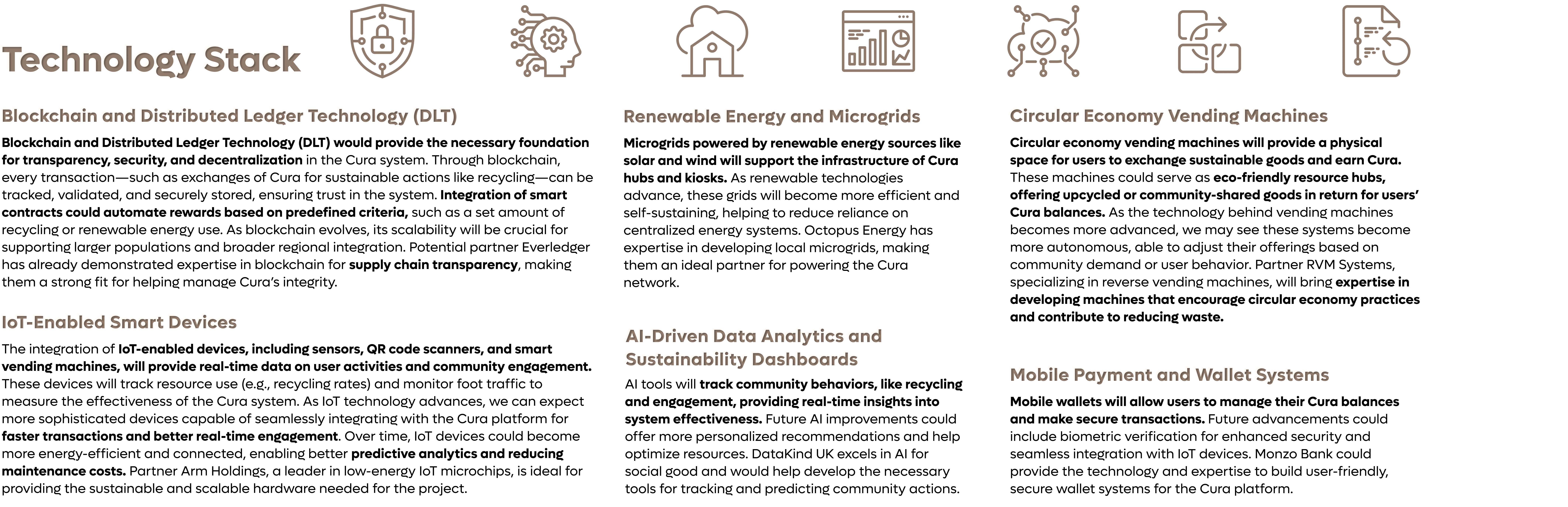
On the technical side, Blockchain Revolution by Tapscott and Tapscott offered clarity on blockchain’s role in enabling trust and transparency, directly inspiring the integration of smart contracts and secure resource exchanges within the system. The Ellen MacArthur Foundation’s detailed reports on circular economy frameworks provided essential technicalities for designing sustainable material flows, shaping the functionality for material reclamation and resource sharing. These readings bridged abstract theories with real-world applications, driving both conceptual depth and practical innovation in Cura’s design. These books, sites, and other related case studies cited created a strong foundation in the possible opportunities, risks, and potential arc of the project, and provided reasonable backing to the inititiave to decentralize consumerism from large-scale retail manufacturing brands.
Conceptualization
Future Scenario
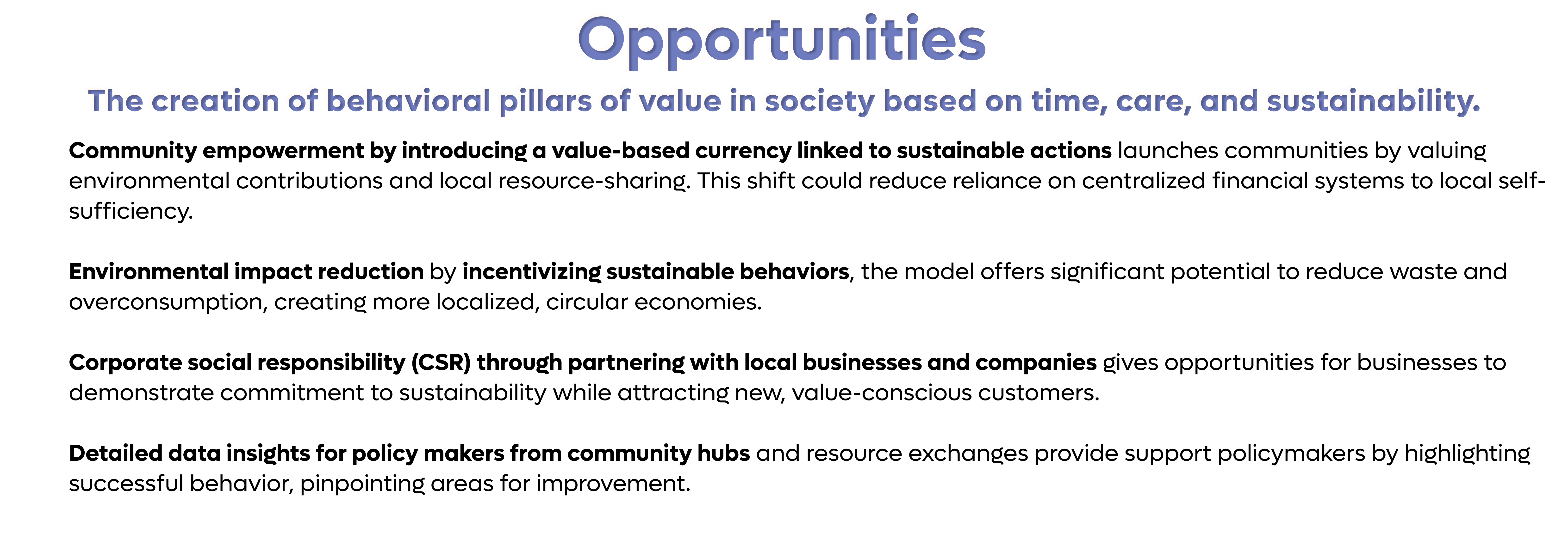
In 10 years, communities thrive on a revolutionary value-based currency system that rewards societal and environmental contributions. This system, built on decentralized blockchain networks, emphasizes time, care, and ecological stewardship over monetary wealth. Communities no longer define success by GDP or material accumulation but by collective well-being and environmental resilience.
In bustling urban centers, digital city dashboards light up with vibrant visuals displaying real-time metrics: air quality improvements, carbon footprint reductions, and community participation in initiatives such as urban gardening, skill-sharing, and material reclamation. Recycling kiosks embedded throughout cities serve as hubs of circular economies. Materials are redirected into local maker labs, where artisans and small businesses craft sustainable products. These labs, supported by the new economy, have revived craftsmanship, enabling cities to celebrate local creativity and reduce reliance on mass production.
Trust-based economics has reshaped marketplaces. Businesses now operate on cooperative models, partnering with communities to co-create solutions rather than extract value. Incentives are deeply tied to sustainability; for instance, individuals receive higher value for repairing items than replacing them. In rural areas, localized currencies adapt to agricultural and ecological needs, fostering food sovereignty and biodiversity through regenerative practices.
Through continuous feedback loops, city dashboards use citizen input and data analytics to adjust incentives and policies. The value-based currency system has not just transformed economies but also social connections. Neighborhoods, once fragmented, are vibrant with shared purpose. Evening potlucks and collaborative art projects are common, blending personal contributions with communal celebration. As communities grow stronger, the culture of care and sustainability becomes a deeply ingrained way of life.
Stage 2
Public Interest Technology System Design




Stage 5
Prototype and Visual Development
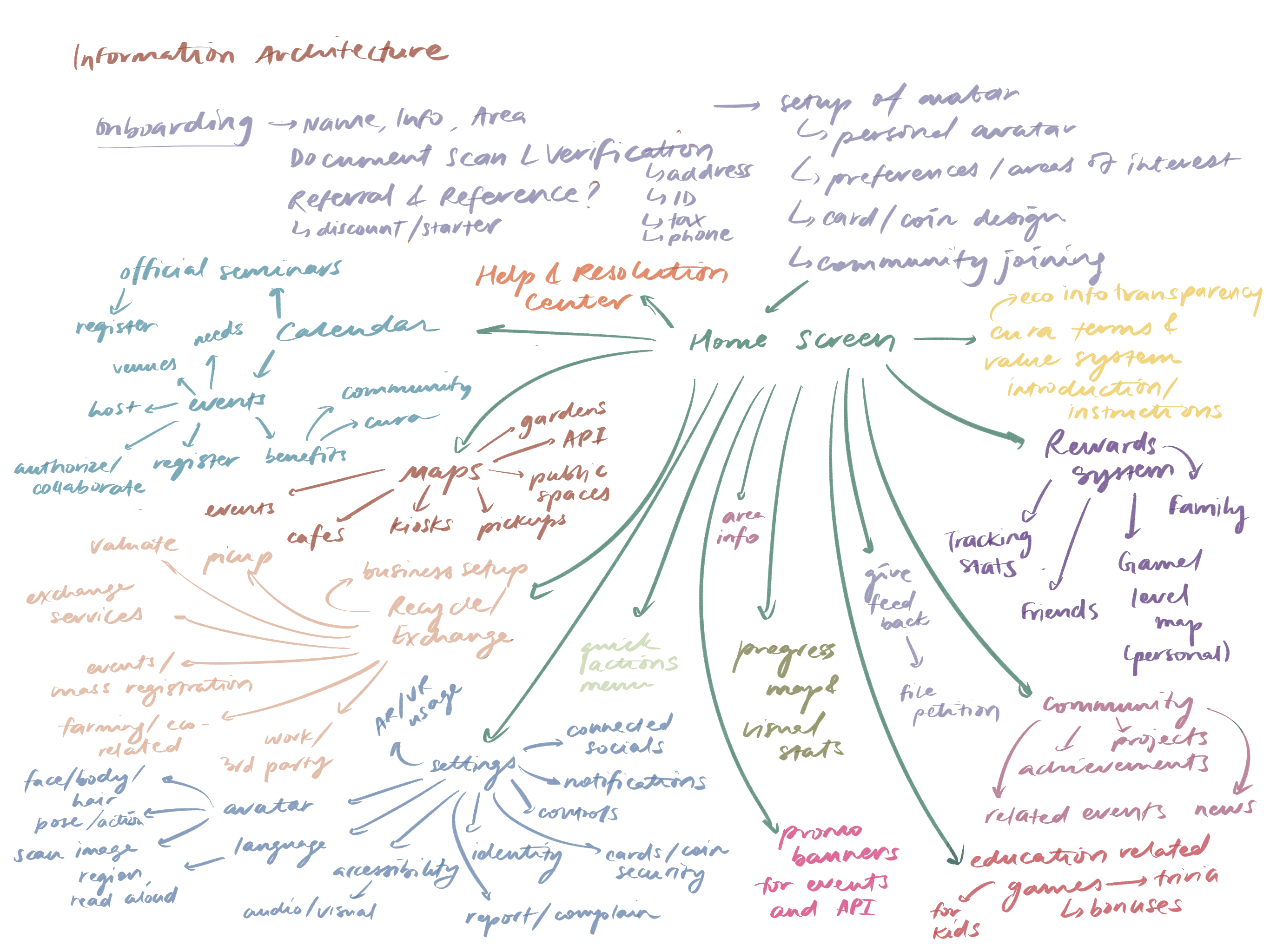
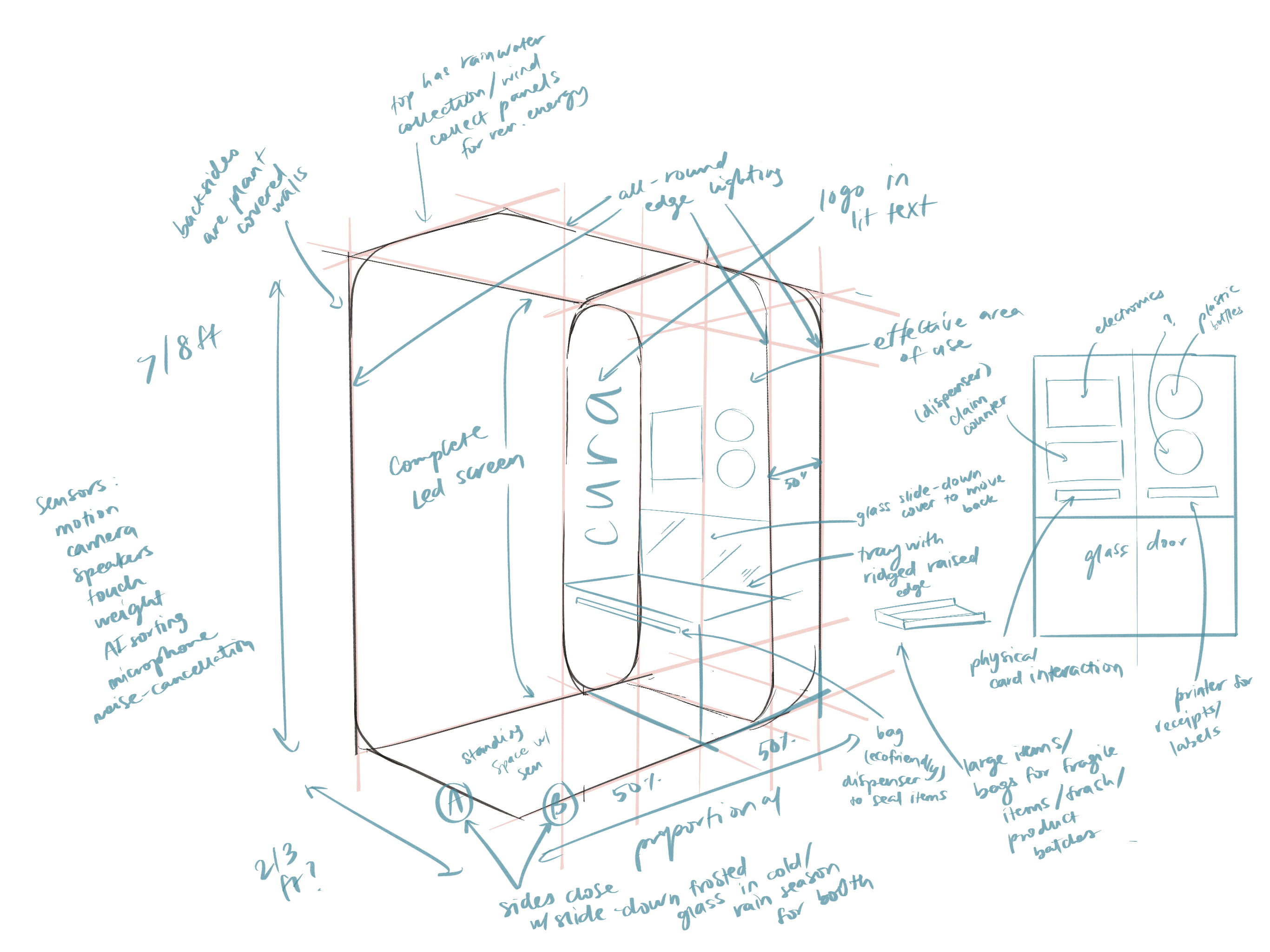
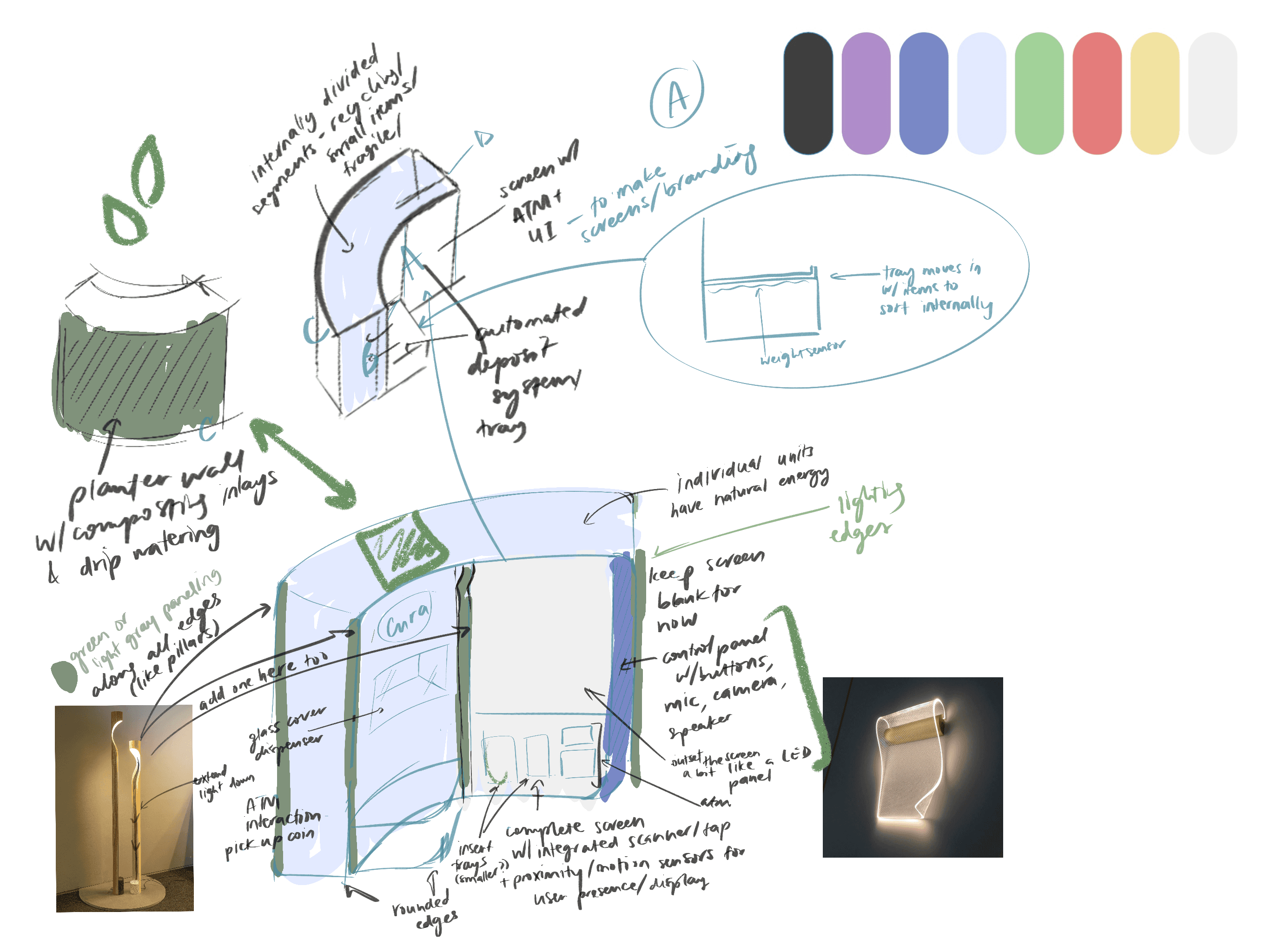
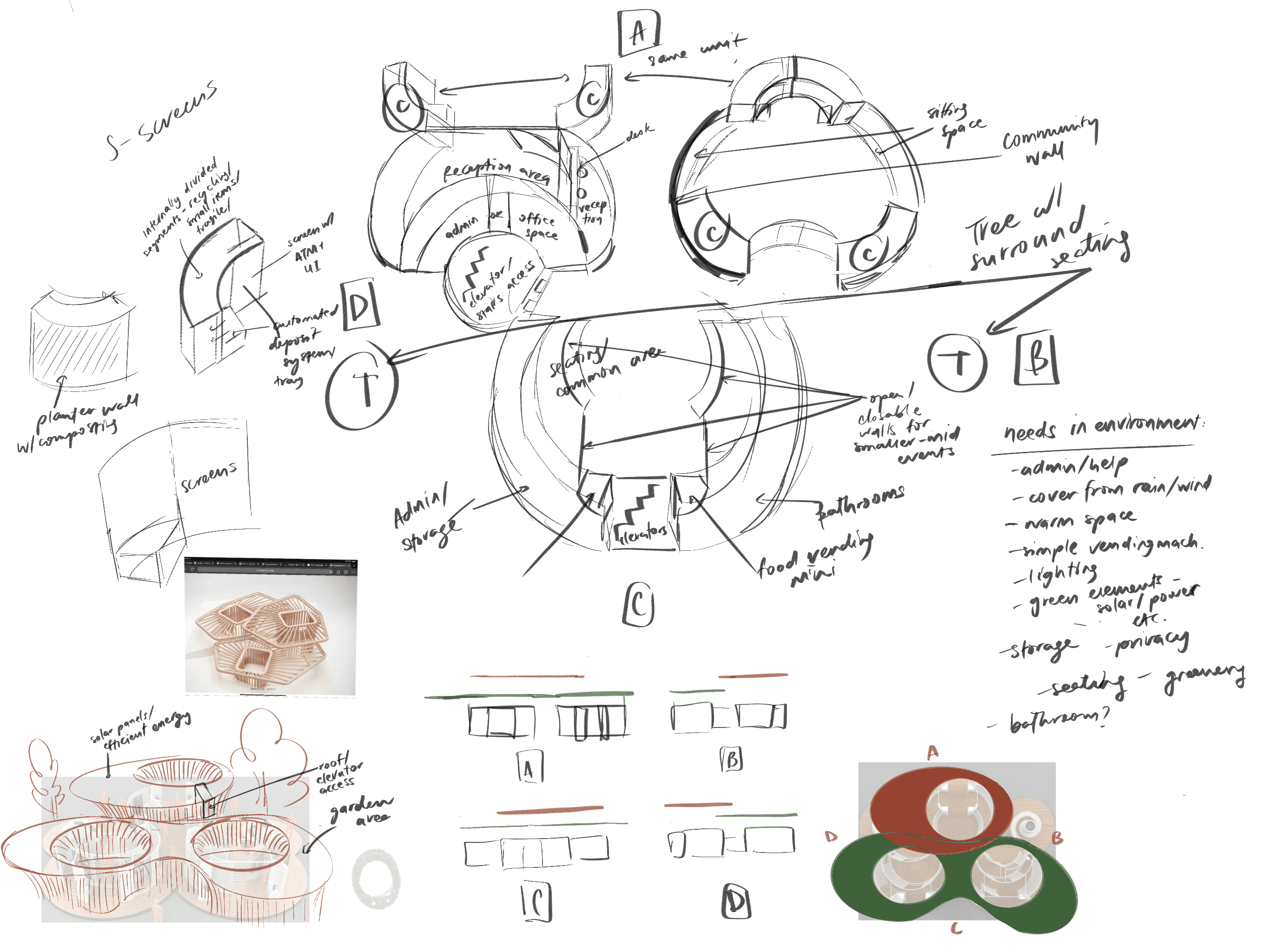
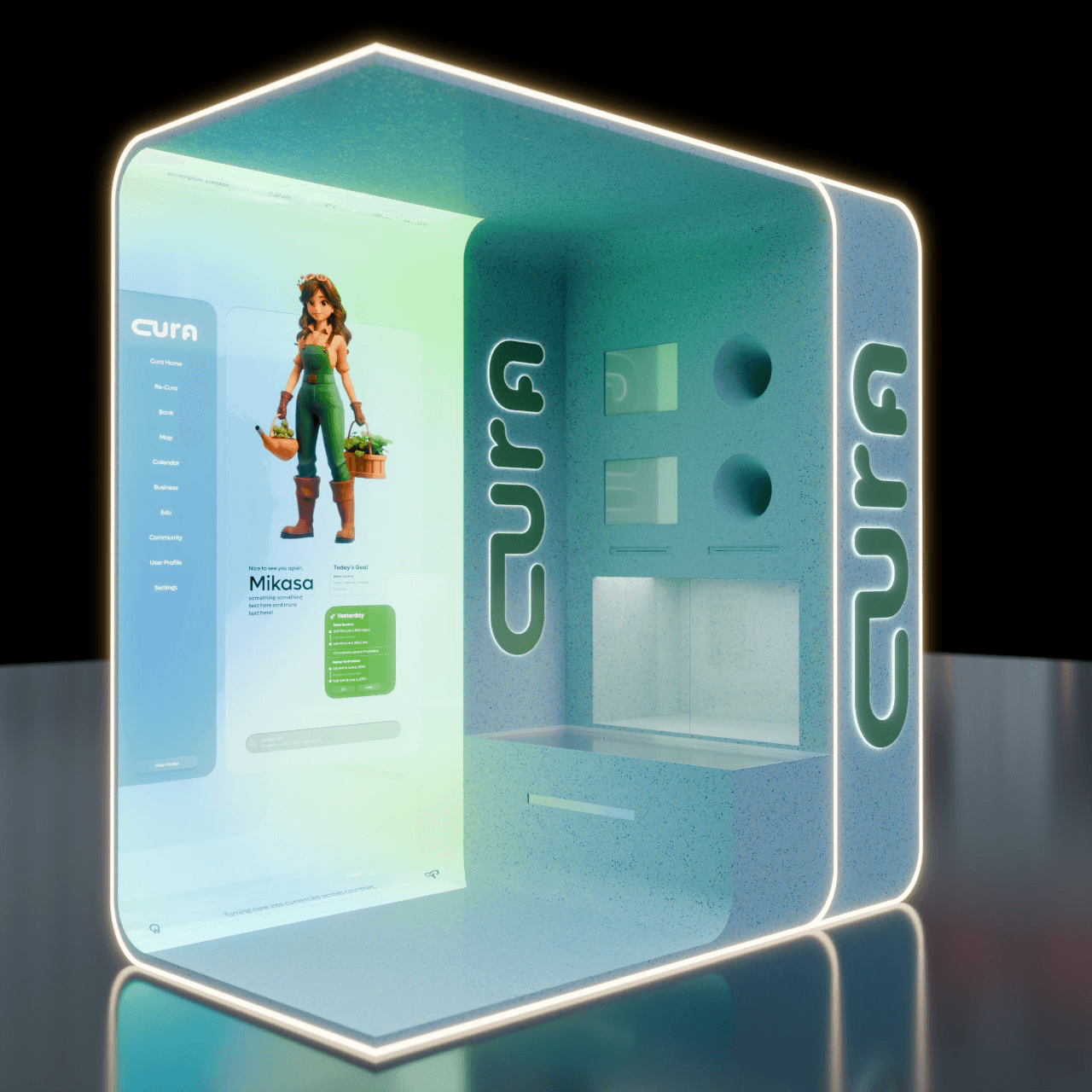
Cura is a community-powered platform that incentivizes sustainable behaviors by rewarding local environmental and social contributions with a unique digital currency. Through resource-sharing kiosks, a mobile app, and public dashboards, Cura enables residents to exchange goods, volunteer hours, and sustainable actions for currency that can be used within the community. Through participation in this gamified system, users collectively reduce waste and cultivate a circular economy, fostering deeper connections and resilience in their urban environment. Cura empowers individuals to make informed, eco-conscious decisions with real-time feedback and an immersive experience. Gamified elements and community events transform daily activities into meaningful contributions toward a sustainable, interconnected city.