"Find out what the strategic positioning is, or create the strategic positioning first, before you go into execution. What are you drawing a logo for if you don't understand what the purpose of this product is?"
— Debbie Millman, Design Matters podcast, 2022
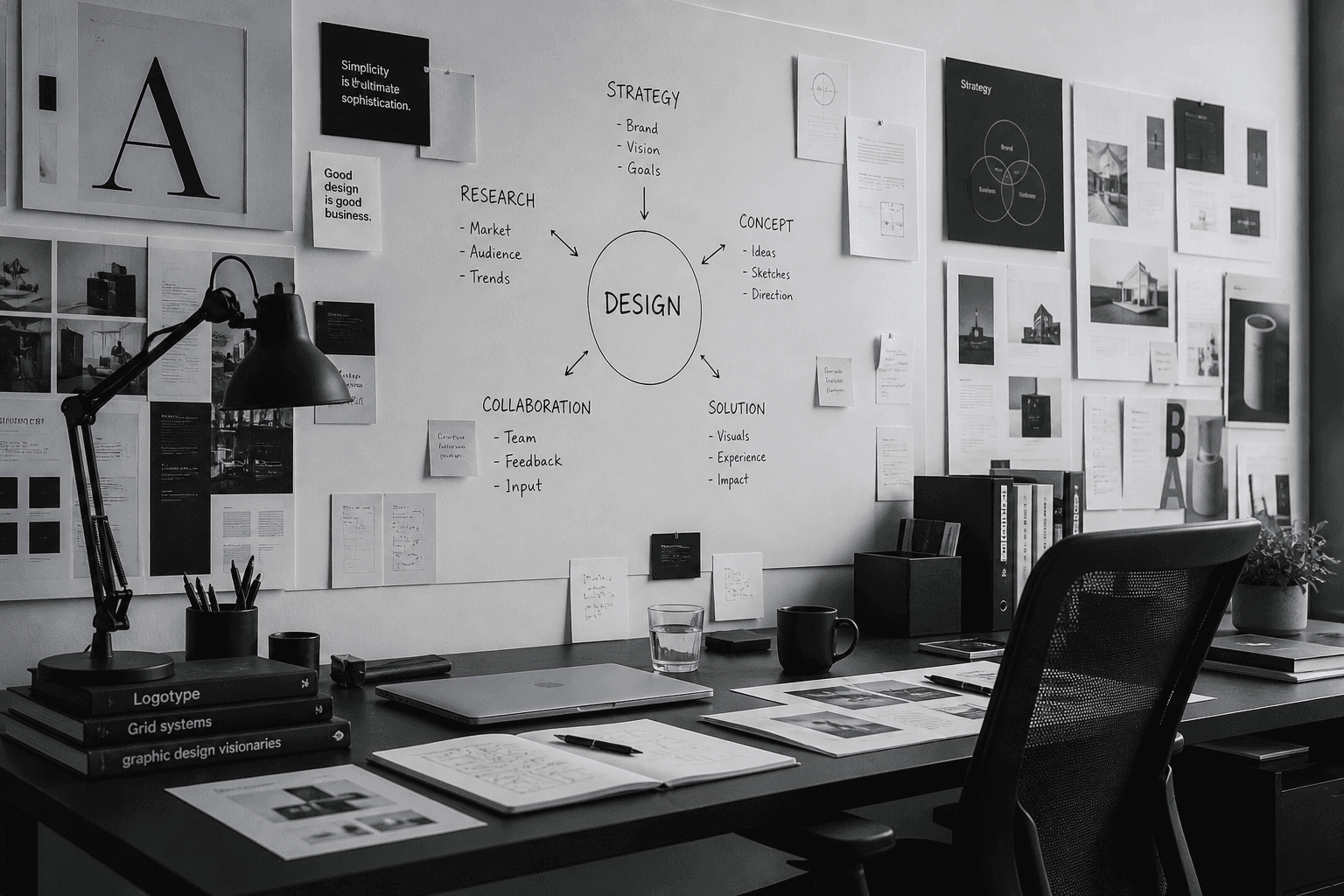
To practice holistically is to refuse the false hierarchy between thinking and making, between strategy and execution, between research and craft. The visual decision and the strategic decision are the same decision, viewed from different angles, made with different tools but rooted in the same understanding of what a thing needs to do and who it needs to reach.
This means the design process begins before the brief is written. The designer who enters at the execution stage has already been handed a problem someone else defined, which means they are working within someone else's assumptions, solving for symptoms rather than causes. The designers who produce the most durable, coherent work, whether running studios, building systems at scale, or operating as independent practitioners, are the ones who interrogate the problem before they solve it. They treat the brief as a starting hypothesis rather than a fixed instruction.
It also means reorienting how we measure design's value. A designer who asks ten rigorous questions at the start of a project and restructures the brief entirely may produce fewer deliverables than one who takes the brief as given and executes it in full. The first designer's work will last longer. The second will be redesigned within eighteen months. Only one is building something worth the investment, and only one is practicing design at the depth the discipline actually demands.
"Good design is not about what medium you're working in. It's about thinking hard about what you want to do and what you have to work with before you start."
— Sheila de Bretteville, cited in 33 Quotes from Female Design Heroes, IdeaSeed
If you have hired a designer and found yourself frustrated that they kept questioning your brief, pushed back on scope, or wanted to understand your business model before opening a file, that was the good kind of designer. The ones who accept every brief without interrogation and execute without question may appear more efficient. Over time, they tend to be more expensive, because what they build carries someone else's assumptions into the structure of your brand, your product, your communication system. Those assumptions compound.
Design at its best is structural. It is the logic by which a company communicates coherently across every surface it touches. It is the framework by which a product feels inevitable rather than assembled. It is the system that holds together when the market shifts, when the company grows, when the brief changes entirely. You would hire an architect who surveys the site before drawing a floor plan. Design operates on exactly the same principle.
The thinking is the work. The questions come first because the right questions make everything that follows more precise, more resonant, and far more durable. Holistic design is design practiced at full depth. It is slower to begin and longer to last, and that is precisely the trade worth making.